The radical transformation of the global luxury lodging sector is currently being driven by the seamless integration of autonomous hospitality cognitive guest infrastructure strategies that prioritize hyper-personalization and operational invisibility. For institutional hotel owners, sovereign wealth hospitality funds, and ultra-high-net-worth developers, the transition toward a sentient building environment is no longer a futuristic aspiration but a fundamental requirement for maintaining market leadership in an increasingly competitive digital landscape.
This complex evolution represents a significant departure from traditional property management systems, moving instead toward a unified “guest-centric” architecture where neural processing units and edge-computing sensors work in concert to anticipate traveler needs before they are ever explicitly voiced. In an era defined by the rapid proliferation of autonomous systems and the rising demand for frictionless physical experiences, the ability to maintain a “sovereign” cognitive perimeter around the guest journey is the ultimate competitive advantage for any premium brand seeking to insulate its reputation from service inconsistencies.
Achieving a truly resilient and predictive hospitality posture requires a clinical orchestration of hardware-level automation, decentralized data synchronization, and biometric-protected privacy frameworks that ensure the guest remains the absolute center of the service universe. As the global travel market continues to segment into high-value experiential niches, providing a cloistered and secure environment for the management of personal preferences has become the primary driver of institutional-grade loyalty and lifetime value.
This infrastructure is not merely a collection of smart devices; it is a strategic asset that allows for the seamless fusion of high-touch human service and ultra-high-speed technological precision. We are witnessing a massive movement toward the utilization of “neuromorphic” hotel environments that can adjust environmental variables—such as lighting, acoustics, and air quality—autonomously based on the physiological feedback of the occupant.
Furthermore, the integration of real-time predictive analytics and automated resource allocation allows for a proactive rather than reactive response to the sophisticated logistical challenges that characterize the modern five-star operation. Ultimately, the goal of these elite hospitality strategies is to provide a frictionless environment where the pursuit of relaxation and professional productivity is never hindered by the limitations of legacy technical debt or human service latency.
This holistic approach ensures that every guest interaction is converted into actionable strategic capital, transforming a standard hotel room into a sentient, hyper-secure vault that can navigate the volatility of the global hospitality market with surgical precision.
A. The Mechanics Of Predictive Guest Profiling

At the foundation of cognitive hospitality is the ability to generate a multi-dimensional profile of a guest’s subconscious preferences without intrusive data collection. By utilizing passive sensor arrays and historical pattern recognition, the infrastructure can identify the exact lighting temperature and humidity levels that optimize a specific guest’s circadian rhythm.
This “silent” profiling ensures that when a guest enters their suite, the environment is already tuned to their specific biological baseline. It eliminates the need for manual adjustments and creates an immediate sense of belonging and comfort.
The neural engine manages these profiles across a decentralized network, ensuring that the same level of personalization is available at any property within the global portfolio. This consistency is a primary driver of trust for the frequent international traveler.
B. Hardware Accelerated Environmental Control Units
Modern smart hotels utilize dedicated hardware accelerators that manage the complex environmental variables of thousands of rooms simultaneously. These units are designed to handle massive parallel workloads, such as real-time acoustic dampening and spectral lighting transitions, with minimal energy consumption.
By processing these tasks at the “edge” of the network, the system can respond to guest movements in milliseconds. This localized intelligence ensures that the room remains a private, secure, and responsive sanctuary that does not rely on a central cloud connection.
Hardware-level integration also provides a higher degree of security against external intrusions. These secure enclaves protect the guest’s environmental data from being harvested by unauthorized third-party actors.
C. Implementing Biometric Frictionless Access Control
Traditional keys and mobile apps are being replaced by biometric-protected access points that utilize facial recognition and gait analysis. This creates a truly “keyless” experience where the guest’s physical presence is the only credential needed to navigate the property.
These systems are architected to prioritize privacy, with biometric templates stored locally in encrypted hardware rather than on a central database. This “sovereign” approach to identity ensures that the guest’s data remains under their absolute control.
By removing the physical barriers of check-in and room entry, the infrastructure allows the guest to transition from the street to their suite without a single interruption. This frictionless flow is the hallmark of modern luxury hospitality management.
D. Decentralized Ledger Systems For Loyalty Integrity
To ensure the absolute integrity of guest rewards and historical preferences, elite hotels are migrating their loyalty programs to decentralized ledger systems. This creates an immutable record of guest interactions that cannot be tampered with or lost due to database failures.
These ledgers allow for the secure sharing of guest preferences between sister properties while maintaining total data confidentiality. It provides a “single source of truth” for the brand’s most valuable assets—its relationships with high-value clients.
Furthermore, smart contracts can be used to automate the delivery of rewards and upgrades in real-time. This eliminates the administrative friction often associated with legacy loyalty programs and increases guest satisfaction.
E. Zero Trust Infrastructure And Guest Privacy Shields
In an autonomous hospitality environment, security is integrated directly into the building’s fabric through a “zero-trust” framework. This assumes that every device connected to the network is potentially hostile and requires continuous verification before accessing guest data.
“Privacy shields” are deployed at the hardware level to block unauthorized tracking or data harvesting within the guest suite. This creates a “secure zone” where the guest can conduct private business or relax without fear of digital surveillance.
Advanced encryption protocols ensure that even the hotel staff cannot access sensitive guest information without explicit authorization. This clinical approach to privacy is essential for attracting the modern celebrity and corporate elite.
F. Real Time Predictive Maintenance And Operational Uptime
The cognitive infrastructure uses AI-driven agents to monitor the health of every mechanical system in the building, from HVAC units to elevator motors. By identifying signs of wear before a failure occurs, the system can schedule “invisible” maintenance during periods of low occupancy.
This ensures 100% operational uptime, which is a mandatory requirement for maintaining five-star service standards. A guest should never experience a broken amenity or a service interruption in a sentient hospitality environment.
Autonomous resource management also optimizes energy consumption, significantly reducing the carbon footprint of the property. It proves that high-performance luxury and environmental stewardship are mutually reinforcing goals.
G. The Role Of Agentic Service Orchestration
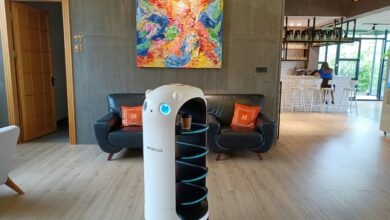
Service delivery is managed by a neural “control plane” that orchestrates both human staff and autonomous robots. This agentic workflow ensures that a guest’s request—whether it’s for room service or a laundry pickup—is handled by the most efficient resource available.
These agents can prioritize tasks based on guest value and urgency, ensuring that the most critical needs are always met first. It creates a “sentient” service layer that adapts to the shifting demands of a fully occupied property.
By offloading logistical coordination to the cognitive engine, human staff are free to focus on high-touch interactions that require emotional intelligence. This fusion of man and machine is the definitive future of the luxury service model.
H. Circadian Lighting And Melatonin Synchronization
Smart hotel suites now incorporate dynamic lighting arrays that mimic the spectral transition of the sun to regulate the guest’s internal clock. This technology is particularly valuable for international travelers seeking to minimize the effects of jet lag.
The system utilizes “blue light” suppression in the evening to encourage natural melatonin production, preparing the guest for deep, restorative sleep. In the morning, it introduces high-intensity wavelengths to boost cortisol and energy levels.
This hormonal synchronization is a critical component of institutional wellness. It transforms a hotel stay into a therapeutic experience that improves the guest’s physical and mental performance.
I. Atmospheric Intelligence And Respiratory Wellness
The air quality within a cognitive hospitality structure is managed with clinical precision, monitoring CO2 levels, allergens, and humidity in real-time. If the system detects a decline in air quality, it can autonomously increase oxygen saturation or introduce medical-grade filtration.
Advanced sensors can also identify the “scent preferences” of a guest and introduce specific botanical terpenes into the ventilation. This “atmospheric intelligence” creates a sensory environment that is both healthy and deeply relaxing.
Respiratory wellness is a major focus for the modern luxury traveler. Providing an environment that is cleaner than the external world is a powerful differentiator for any premium hotel brand.
J. Acoustic Sculpting And Sonic Privacy Zones
Luxury hotels utilize active noise-canceling technology built into the walls and windows to create “silent zones” within the guest suite. This acoustic sculpting ensures that the sounds of the city or neighboring rooms never disturb the occupant.
Beyond just silence, the system can introduce “biophilic soundscapes”—such as the frequency of falling rain or mountain wind—to mask any residual noise. This auditory layer is tuned to the specific resonance of the room’s geometry.
Institutional-grade acoustic engineering prevents “sonic fatigue,” which is a major contributor to travel-related stress. It creates a sanctuary where the mind can focus or rest without interruption.
K. Haptic Interfaces And Sensory Grounding
Interactions within the guest suite are moving away from glowing screens toward “haptic” interfaces integrated into natural materials. A simple touch on a wooden nightstand or a stone counter can control the entire room’s environment.
This reduces “screen fatigue” and keeps the guest’s focus on their physical surroundings. It is a “calm technology” approach where the intelligence of the room is omnipresent but entirely invisible.
These haptic systems provide a satisfying physical response that reinforces the connection between the guest and the architecture. It is a clinical application of design psychology to the hospitality experience.
L. Predictive Analytics For Food And Beverage Optimization
The cognitive engine analyzes guest dietary preferences and historical consumption patterns to optimize the hotel’s food and beverage supply chain. This ensures that the guest’s favorite vintage or specific dietary ingredients are always in stock before they arrive.
Autonomous “chef agents” can even suggest personalized menus based on the guest’s current nutritional needs or biological state. This level of culinary customization is a primary driver of high-ticket transactional intent.
Predictive analytics also reduces food waste, improving the overall profitability of the F&B operation. it is a surgical approach to luxury dining that prioritizes quality over volume.
M. The Impact Of Spatial Proportions On Guest Confidence
Design psychology is utilized to create spatial flows that influence the guest’s emotional state. Luxury hotel lobbies and suites use specific proportions and sightlines to trigger a sense of expansive thinking and confidence.
These “power spaces” are carefully calibrated to be imposing but not intimidating, making the guest feel like the master of their environment. It is an architectural application of “power posing” that has a lasting impact on the subconscious.
For the corporate elite, these spaces are catalysts for strategic thought and successful negotiation. The architecture itself becomes a tool for professional achievement.
N. Sustainable Material Recovery In Hotel Construction
As institutional investors focus more on ESG criteria, luxury hotel construction is moving toward a “circular” model. This involves the use of high-grade materials that can be recovered and repurposed at the end of the building’s lifecycle.
Using “upcycled” rare stones or reclaimed timbers adds a sense of history and “soul” to the property while meeting sustainability goals. It appeals to the eco-conscious values of the modern global traveler.
Sustainable luxury is no longer an oxymoron; it is a strategic requirement for attracting long-term institutional capital. It ensures that the property’s legacy is one of environmental stewardship.
O. Creating A Perennial Sovereign Hospitality Legacy
The ultimate goal of autonomous hospitality cognitive guest infrastructure strategies is the creation of a perennial legacy. This is a state where the brand’s reputation for excellence is protected and enhanced by a sentient digital architecture.
Achieving this requires a commitment to radical innovation and a willingness to embrace the most advanced scientific discoveries in biology and technology. It is a journey toward a world where the hospitality experience is a sentient extension of the guest’s own needs.
The properties we build today will define the quality of the global travel market for generations to come. By mastering the art of the cognitive guest engine, the modern hospitality steward secures their place at the peak of the international service economy.
Conclusion

Cognitive hospitality infrastructure is the essential pillar for the next generation of luxury lodging. Neural profiling allows for the clinical anticipation of guest needs without intrusive data harvesting. Edge-computing accelerators provide the processing power needed for a hyper-responsive room environment. Biometric access control creates a truly frictionless journey from the street to the suite. Decentralized ledgers ensure the absolute integrity of guest loyalty and preference data. Zero-trust frameworks act as a sovereign shield for the guest’s digital and physical privacy. Predictive maintenance ensures 100% operational uptime for every institutional property asset.
Agentic service orchestration allows human staff to focus on high-touch emotional intelligence. Circadian lighting and respiratory wellness are critical interventions for the modern international traveler. Acoustic sculpting and haptic interfaces create a sensory sanctuary that reduces travel-related stress. Predictive F&B optimization provides a level of culinary personalization that drives institutional loyalty. Sustainable material recovery ensures that the hotel’s legacy is one of environmental and fiscal responsibility. The future of luxury hospitality is a sentient environment that actively masters the guest experience.