The global hospitality landscape is currently witnessing a historic shift as mechanical precision meets human-centric service through the integration of robotics. For decades, the industry relied solely on the physical presence and labor of human staff to manage every guest interaction, from check-in to room service. However, a new era has dawned where autonomous systems are no longer a futuristic novelty but a functional necessity in high-end hotels. These robotic assistants are designed to handle repetitive and logistically heavy tasks with a level of consistency that human workers simply cannot replicate over a 24-hour cycle. This transition is not merely about replacing staff; it is about elevating the entire service ecosystem to provide a more efficient and hygienic experience.
Modern travelers, who are increasingly tech-savvy, now view robotic service as a hallmark of a forward-thinking and sophisticated property. From autonomous luggage carriers to robotic baristas and ultraviolet disinfection droids, these machines are redefining the operational standards of luxury. This article will explore how robotics is carving a new path for the industry, allowing for a seamless blend of high-tech efficiency and personalized human attention. We are witnessing the birth of a hybrid hospitality model that prioritizes guest time, safety, and novelty in ways we never thought possible.
The Functional Core of Autonomous Hotel Staff

The success of robotics in hotels depends on the ability of machines to navigate complex, high-traffic environments without human intervention. This is achieved through a combination of advanced sensors, mapping technology, and real-time data processing.
A. Lidar and Slam Navigation Systems
Robots use Light Detection and Ranging (Lidar) to create a 360-degree map of their surroundings, allowing them to avoid obstacles like luggage or moving guests. This ensures they can move safely through crowded lobbies or narrow corridors with pinpoint accuracy.
B. Cloud-Based Fleet Management
Individual robots are connected to a central brain that manages their battery levels, task lists, and location. This allows a hotel to coordinate a dozen different droids to ensure that no guest request is delayed.
C. Elevator and Door Integration
Modern service robots are programmed to communicate with the building’s infrastructure, allowing them to call elevators and open automatic doors. This enables them to provide room service to any floor in a multi-story hotel without human assistance.
Revolutionary Room Service and Delivery Droids
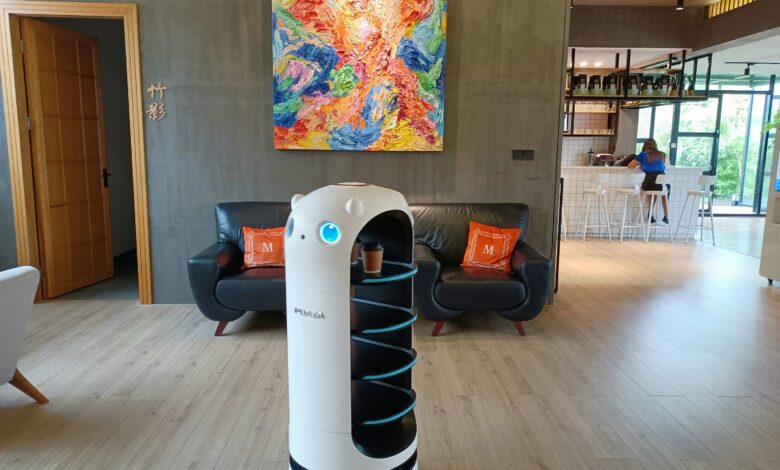
One of the most visible roles for robots in modern hotels is the delivery of amenities and food directly to guest rooms. This system provides a level of privacy and speed that traditional room service often struggles to achieve during peak hours.
A. The Privacy Benefit of Robotic Delivery
Many guests prefer the anonymity of receiving a delivery from a machine, especially during late-night hours. The robot arrives at the door, sends a notification to the guest’s phone, and departs as soon as the items are retrieved.
B. Speed and Reliability in High-Occupancy Periods
A robot does not get distracted by conversations or the need for breaks, ensuring that a bottle of water or a fresh towel arrives in minutes. This consistency is vital for maintaining high guest satisfaction scores in large-scale properties.
C. Secure Compartments and Hygiene Standards
Robots feature locked internal compartments that can only be opened by the guest using a secure code or biometric scan. This ensures that food and linens remain uncontaminated and secure during transit from the kitchen or laundry.
The Rise of Robotic Culinary Experts
The kitchen and the bar are the latest frontiers for robotic innovation, where machines are now performing complex tasks with chef-like precision. This is particularly useful for high-volume tasks where consistency in taste and presentation is the primary goal.
A. Autonomous Baristas and Mixologists
Robotic arms can now craft complex coffee drinks and cocktails with the exact measurements required for a perfect result. These systems can work throughout the night, providing a 24-hour high-end beverage service without a human bartender.
B. Precision Cooking for Consistent Quality
In some hotels, robots are used to handle the repetitive aspects of food preparation, such as flipping burgers or assembling salads. This allows the human chefs to focus on creative menu development and the artistic presentation of the dishes.
C. Robotic Breakfast and Omelet Stations
Automated stations can cook eggs to a guest’s specific preference and serve them onto a plate without any human contact. This reduces the risk of foodborne illness and ensures a fast, efficient experience during the morning rush.
Advanced Cleaning and Disinfection Protocols
In the post-pandemic era, cleanliness has become a top priority for every traveler, and robots are uniquely qualified to manage deep disinfection. These machines can work in environments and with chemicals that might be hazardous for human workers.
A. Ultraviolet (UV-C) Light Disinfection
Robots equipped with powerful UV-C lamps can sanitize entire rooms and public areas, killing 99.9% of bacteria and viruses. This process is far more effective than manual wiping and provides guests with absolute peace of mind.
B. Autonomous Floor and Carpet Maintenance
Large-scale robotic vacuums and scrubbers can maintain the cleanliness of vast lobbies and corridors throughout the night. This ensures that the hotel always looks its best for the first guest that walks out in the morning.
C. Air Purification and Monitoring Droids
Some robots are designed to move through a property while monitoring air quality and neutralizing airborne pollutants. These drip-sized machines act as mobile air purifiers, ensuring that the hotel’s atmosphere remains fresh and healthy.
Enhancing the Lobby with Interactive Concierge Robots
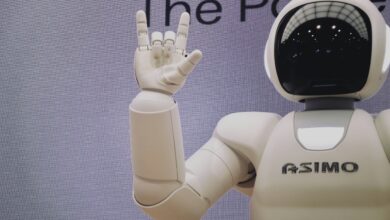
The first point of contact for many guests is now an interactive social robot that can provide information, directions, and entertainment. These machines act as a bridge between technology and hospitality, offering a unique and engaging welcome.
A. Multilingual Guest Assistance and Wayfinding
Social robots can communicate in dozens of languages, helping international guests find their way to the gym, the restaurant, or their room. They can also display maps and floor plans on their integrated screens for better clarity.
B. Automated Check-in and Key Issuance
Guests can interact with a robot to verify their identity and receive their room keys, bypassing the traditional reception desk. This is especially helpful during the busy hours of 3 PM when check-in lines are usually at their longest.
C. Novelty and Brand Storytelling
A friendly robot in the lobby serves as a great “Instagrammable” moment, helping to build the hotel’s brand on social media. These machines can tell the history of the hotel or suggest local attractions in an entertaining way.
The Impact of Robotics on Operational Efficiency
From a business perspective, the integration of robotics provides a significant boost to the hotel’s bottom line by optimizing labor and reducing waste. This allows the property to reinvest those savings into better amenities and more luxurious guest experiences.
A. Reducing the Physical Burden on Human Staff
By letting robots handle heavy lifting and long-distance walking, the hotel can reduce workplace injuries and staff fatigue. This leads to a happier, more energetic workforce that can provide better service to the guests.
B. Lowering Long-Term Operational Costs
While the initial investment in a robot can be high, the long-term cost of operation is significantly lower than manual labor. Robots do not require health insurance, vacations, or overtime pay, making them a highly cost-effective solution.
C. Data-Driven Service Improvements
Robots collect data on every delivery and interaction, providing management with deep insights into guest behavior and service bottlenecks. This information is invaluable for making continuous improvements to the hotel’s operation.
Challenges and the Ethics of Automation
As we embrace a more automated future, we must also address the challenges that come with it, including guest acceptance and the future of human work. A successful robotic strategy requires a balance that respects both the technology and the people it serves.
A. The Importance of Human Oversight
Robots are tools, not replacements for human judgment and empathy; there should always be a human “in the loop” to handle complex situations. If a robot encounters a problem it cannot solve, it must be able to call for human help immediately.
B. Ensuring a Warm and Welcoming Atmosphere
A hotel that relies too heavily on machines can feel cold and industrial, which is the opposite of good hospitality. The goal is to use robots to handle the “boring” tasks so that humans can be more present and warm during guest interactions.
C. Cybersecurity and Data Protection
Since robots are connected to the hotel’s network and often carry cameras, they must be protected against hacking and unauthorized access. Ensuring the privacy of the guest’s movements and data is a non-negotiable requirement for high-end properties.
Robotics in Maintenance and Behind-the-Scenes
Some of the most important work done by robots in hotels happens out of the guest’s sight, in the laundry rooms, basements, and technical areas. These “back-of-house” robots are the unsung heroes of the modern luxury experience.
A. Autonomous Laundry Sorting and Processing
Robotic systems can sort thousands of sheets and towels based on their material and level of soiling. This ensures that linens are washed at the optimal temperature and treated with the right amount of detergent for longevity.
B. Inventory and Warehouse Automation
Small robots can manage the hotel’s stock of toiletries, cleaning supplies, and minibar items, ensuring that the property never runs out of essentials. This precision prevents over-ordering and reduces the amount of capital tied up in inventory.
C. External Building Maintenance and Window Cleaning
Robots can be used to clean the exterior windows of skyscrapers or maintain the hotel’s rooftop gardens. This eliminates the need for human workers to perform dangerous tasks at great heights, improving overall safety.
The Future Evolution of Hotel Robotics
We are only at the beginning of the robotic revolution in hospitality, and the next few years will bring even more advanced and capable machines. The future will likely see a move toward “soft” robotics and even more lifelike interactions.
A. Socially Intelligent and Empathetic Robots
Next-generation robots will be better at reading human body language and vocal tones, allowing them to respond with more empathy. They will be able to tell if a guest is in a hurry or if they want to chat, adjusting their behavior accordingly.
B. Swarm Robotics for Large-Scale Tasks
In the future, a “swarm” of small robots might work together to clean a large ballroom in minutes or move heavy furniture for an event. This collective intelligence will allow for even greater speed and flexibility in hotel operations.
C. Wearable Robotics for Human Staff
We may see hotel staff wearing exoskeletons that help them lift heavy luggage or perform repetitive cleaning tasks without strain. This “augmented humanity” represents the ultimate partnership between man and machine.
Integrating Robotics into the Guest Journey
To get the most out of robotic service, it must be seamlessly integrated into every step of the traveler’s experience. From booking to check-out, the technology should feel like a natural and helpful part of the stay.
A. Pre-Arrival Communication and Preparation
The hotel’s AI can coordinate with delivery robots to have the room perfectly stocked with the guest’s favorite snacks before they arrive. This ensures that the “personalized” part of the stay is ready from the first second.
B. Mobile App Control over Robotic Services
Guests should be able to summon a robot or track their delivery through the hotel’s official app. This gives the guest a sense of control and makes the technology feel like a personal tool rather than a novelty.
C. Feedback Loops and Continuous Learning
After a robotic interaction, the guest should be able to provide quick feedback on the performance. This data helps the hotel fine-tune the robot’s programming to better meet the expectations of its specific clientele.
Conclusion

The integration of robotics is fundamentally transforming the standards of service in the global hospitality market. Machines are proving that consistency and speed are the new pillars of high-end guest satisfaction. By automating repetitive tasks, hotels can allow their human staff to focus on emotional and creative service. Privacy and hygiene have become major drivers for the adoption of autonomous delivery and cleaning systems. Robots in the kitchen and bar are ensuring a level of precision that was once thought to be impossible.
Operational efficiency and cost reduction are allowing hotels to reinvest in better guest amenities and experiences. The lobby is being reimagined as a high-tech gateway where social robots provide a unique and engaging welcome. Data collected by autonomous systems is providing management with the tools to make smarter, faster decisions. Safety for both guests and staff is significantly improved through the use of robots for hazardous or heavy tasks. The cultural shift toward accepting robotics is moving faster than many industry experts originally predicted.
Maintaining a balance between high-tech efficiency and human warmth is the key to a successful strategy. Future innovations will bring even more socially intelligent and capable machines into our living spaces. The hotel of the future is a living ecosystem where humans and machines work in perfect, productive harmony. We are seeing the democratization of luxury service as technology makes high-end efficiency more accessible. The journey toward total automation is not a destination but a continuous process of learning and adaptation. True hospitality remains a human art, but it is one that is increasingly supported by mechanical brilliance. Welcome to the era where your next five-star experience might just be delivered by a friendly, silent droid.